

Key Takeaways
- SME IPO preparation should start 12 to 18 months before you approach a merchant banker. Completing an IPO practice often takes 12 to 24 months for SMEs, and rushing leads to costly rework and delays.
- Check eligibility criteria early: net worth thresholds, minimum net tangible assets of at least ₹1.5 crore, positive EBIDTA in at least 2 of the last 3 financial years, leverage ratio not exceeding 3:1, and a clean promoter track record.
- Clean your books of accounts, taxes, legal documents, and corporate governance structure before anyone starts preparing the draft red herring prospectus (DRHP).
- Good pre ipo preparation reduces overall SME IPO cost, speeds up stock exchange approval, and almost always results in a better company’s valuation compared to a rushed ipo process.
- Treat IPO readiness as a business-improvement exercise. The systems, controls, and discipline you build during preparation will serve your company for years, whether you list or not.
Introduction: Why SME IPO Preparation Matters in 2026
Indian small and medium enterprises are raising capital through initial public offerings at a pace nobody expected five years ago. In FY 2024-25 alone, approximately 235 SME IPOs raised around ₹8,200 crore through the sme platform on NSE Emerge and BSE SME. The securities market for smaller companies has matured rapidly, and the Securities and Exchange Board of India (SEBI) has responded with tighter rules to protect retail investors while keeping the door open for genuine medium enterprises.
In my 20+ years as a Chartered Accountant, I have seen one pattern repeat itself: most delays and cancellations in SME IPOs happen because of weak preparation, not because the merchant banker or the stock exchange created problems. Promoters approach a SEBI registered merchant banker with excitement but without clean financials, pending tax disputes, or incomplete legal documents. The result is months of rework, higher costs, and sometimes a shelved plan.
This article is a complete sme ipo preparation roadmap. If you are a promoter, CFO, finance manager, or an advisor helping a company decide whether to raise capital through an sme ipo, this guide will walk you through every step you need to take before signing a mandate letter. Start early, and treat IPO readiness as a business-transformation exercise, not just a fundraising event.
What is an SME IPO and How is it Different from a Mainboard IPO?
An sme ipo is a public offering where small and medium sized companies list their shares on dedicated sme exchange platforms like NSE Emerge or BSE SME. The company issues shares to the public through a structured sme ipo process governed by SEBI’s ICDR regulations. The sme ipo full form is simply “Small and Medium Enterprise Initial Public Offering.”
The difference between an sme ipo and a normal ipo on the mainboard is significant. In an sme ipo, post issue paid up capital must not exceed ₹25 crore. SME IPOs require lower post-issue capital, up to ₹25 crores, while mainboard ipos have no such cap. The minimum investment or application size for sme ipo application is currently around ₹2 lakh (raised from ₹1 lakh in March 2025). SME IPOs have fewer minimum allottees – only 50, compared to 1,000 for mainboard listings. SME IPOs mandate three years of market making post-issue through designated market makers who maintain liquidity. SME IPOs have relaxed compliance norms compared to normal IPOs, though SEBI has been tightening these steadily. SME IPOs are listed on specialized platforms like bse sme and nse emerge, not on the main trading board.
However, SME IPOs have lower liquidity than main board listings. Thin trading volumes can amplify price swings in SME IPOs, and scarce analyst coverage increases information asymmetry for sme ipo investments. Investing in SME IPOs carries higher volatility risks. SME IPO companies often have limited operating history compared to large-cap stocks.
Typical sectors suited for sme exchange listing include manufacturing, trading, IT services, logistics, and healthcare. Companies with turnover between ₹25 crore and ₹300 crore, stable margins, and clear growth and expansion plans are natural candidates. If your capital requirement is very large or you already have a diversified institutional investor base, a mainboard IPO may be more appropriate. Many promoters strategically start with an sme ipo and migrate to the mainboard later as the business scales.

Why Early SME IPO Preparation is Critical for Promoters
Between 2024 and 2026, the Exchange Board of India and both sme exchanges have raised the bar significantly. Investors, stock exchange listing advisory committees, and regulators today scrutinise corporate governance, tax compliance, and the leverage ratio of medium enterprises far more closely than before.
Consider two companies from recent practice. One manufacturing firm started its clean-up work 14 months before approaching a merchant banker: standardising accounting policies, clearing pending GST notices, registering trademarks, and appointing independent directors. Its sme listing process from mandate to listing took about 5 months. Another trading company rushed in with unstandardised books, unreconciled GST returns, and expired factory licences. Its DRHP was returned with 40+ queries. The process stretched past 12 months, and advisory fees doubled.
Strong preparation delivers four concrete advantages:
- Higher investor confidence, because potential investors see clean, consistent financial performance
- Better valuation multiple, since there are fewer adjustments and risk discounts
- Smoother due diligence, meaning your merchant banker conducts reviews faster and files with fewer issues
- Lower last-minute sme ipo cost, because there is less rework for auditors, lawyers, and the merchant banker
Once the draft red herring prospectus is filed, promoters have very little room to fix structural issues. The clean-up must happen before the merchant banker prepares and files documents.
Practical takeaway: Keep records clean for at least the last 3 financial years. Run your business as if you are already a publicly listed company.
SME IPO Eligibility Criteria in India: Practical View
The eligibility criteria for sme listing exist to ensure only reasonably stable, compliant companies reach the capital market. While criteria vary slightly between nse emerge and bse sme platforms, the core listing requirements remain similar.
Here are the key thresholds every promoter should know:
- Post issue paid up capital must not exceed ₹25 crore
- Net tangible assets should be at least ₹1.5 crore (BSE SME now expects ₹3 crore in some cases)
- The company needs a track record of at least 3 years of operations (or predecessor entity history)
- EBIDTA must be positive for 2 out of the last 3 years
- The leverage ratio (total debt to equity) should not exceed 3:1
- Net worth must be at least ₹1 crore in each of the preceding two full financial years
- SMEs must be incorporated under the Companies Act, 1956 (or Companies Act, 2013, as applicable)
Promoter and director requirements are equally important. No disqualifications under the companies act, no wilful defaults, no serious SEBI, RBI, or stock exchange actions, and a clean banking track record are mandatory. All promoter holdings must be in demat form.
Certain categories such as broking companies face additional requirements, including higher minimum net worth and profit thresholds. They should prepare extra documentation.
Example: A chemicals manufacturer had revenue of ₹80 crore and operating profit of ₹3 crore. On paper, it looked eligible. But its debt-to-equity ratio was 4.2:1, and it had an undisclosed income tax dispute worth ₹50 lakh. Until the leverage ratio was brought under 3:1 and the tax dispute was disclosed and provisioned, it could not proceed.
Understanding Key Financial Concepts: Net Worth, Net Tangible Assets, and Leverage
Many promoters hear terms like “minimum net tangible assets” or “leverage ratio” from advisors but do not fully understand them. Let me break these down.
Net worth is calculated as share capital plus reserves minus accumulated losses and deferred expenditure. If your company has issued equity of ₹2 crore, reserves of ₹3 crore, and accumulated losses of ₹1 crore, net worth equals ₹4 crore. For sme ipo eligibility, this should be at least ₹1 crore in each of the last two financial years.
Net tangible assets means net worth minus intangible assets (goodwill, trademarks, deferred charges) and fictitious assets. An sme’s net tangible assets matter because exchanges test this separately. If your company has net worth of ₹4 crore but includes ₹2.5 crore in intangible assets, your net tangible assets drop to ₹1.5 crore – barely meeting the floor. Watch this number closely.
The leverage ratio is total debt divided by equity. A manufacturing company with ₹9 crore in term loans and working capital and ₹3 crore in equity has a ratio of 3:1. Cross this limit, and eligibility criteria for sme listing fail. Companies in asset-heavy sectors like manufacturing must plan capital structure carefully.
Actionable tips: Restructure expensive unsecured loans, convert promoter loans into equity where possible, and avoid sudden large borrowings right before filing. These moves improve both eligibility and the story you present to potential investors.
Which Businesses Should Consider an SME IPO Instead of a Mainboard IPO?
Not every company is ready for a mainboard ipo, and the sme exchange is often the smarter first step for growing medium enterprises.
The typical profile of a strong sme ipo candidate:
- Turnover between ₹25 crore and ₹300 crore
- Stable or growing profits with 3+ years of track record
- Clear expansion plan needing equity capital of ₹10 crore to ₹80 crore
Example 1: A fabricated metals manufacturer wants to invest ₹20 crore in a new production line. Bank debt alone would push its leverage ratio past safe limits. An sme ipo allows it to raise funds, reduce reliance on debt, and gain credibility with large customers.
Example 2: A trading firm with ₹100 crore turnover plans to open 5 new branches. It needs ₹15 crore equity. An sme ipo is more practical than a mainboard listing for this size.
Example 3: An IT services company building a SaaS platform needs ₹25 crore. It has a 4-year track record and growing margins. The sme platform suits it perfectly.
If your capital requirement exceeds ₹100 crore or you already have institutional investors, consider a mainboard ipo directly. Remember, Indian regulations allow migration from sme exchange to mainboard once post issue capital, profitability, and track record as a listed entity meet the thresholds. Discuss your long-term capital strategy with a Chartered Accountant and merchant banker before deciding.

Complete SME IPO Preparation Roadmap (Step-by-Step)
This is the core of the article: 10 major preparation steps that every promoter should follow, ideally over 12 to 18 months. Each step includes practical guidance, common issues, and quick action points.
This roadmap applies to most sectors – manufacturing, trading, and services – with minor adjustments during due diligence and valuation.
Before engaging a merchant banker, form an internal IPO readiness team: your CFO (or senior accounts person), company secretary or legal head, and operations lead. Maintain a simple “IPO Preparation Tracker” listing each step, owner, target date, and status.
Step 1: Business Readiness Assessment Before SME IPO
Before touching a single financial document, ask yourself honest questions. Is your business model strong enough to explain to outside investors? Is revenue stable, or does it depend on one or two customers? What happens if the founder is unavailable for three months?
Investors seek clear growth strategies and competitive advantages in IPO narratives. Review customer concentration, supplier dependency, management depth beyond the founder, and succession planning. If 60% of revenue comes from one client, that is a risk factor you must either reduce or clearly disclose.
Examine segment-wise profitability and whether your revenue recognition is realistic. Avoid artificial year-end sales pushes that inflate numbers temporarily. Conduct a simple SWOT analysis and note 2–3 action items to strengthen weaknesses before any DRHP work begins.
Takeaway: If business fundamentals are not sound, an IPO will not fix them. Fix the business first, then raise money from the public.
Step 2: Financial Statement Cleanup and Standardisation
You need at least the last 3 years of audited financial statements that are consistent, prepared as per applicable accounting standards, and compliant with companies act requirements.
Common issues found in SMEs:
- Personal expenses of promoters booked in the company
- Cash sales not properly recorded
- Related party transactions without documentation
- Inventory not reconciled with physical stock
Standardise accounting policies across all years – revenue recognition, inventory valuation, depreciation methods, and provisions. If your company recognised revenue on delivery in one year and on invoice in another, restated financial statements will need adjustments.
Preparation of offering documents is essential for IPO submission, and restated financials covering 3 years plus the stub period form the backbone of your draft offer document.
Example: A director’s personal car running expenses of ₹8 lakh per year were booked under company expenses. During restatement, auditors reclassified these, reducing reported profit and requiring disclosure. Had it been cleaned up 12 months earlier, the company would have avoided a query from the exchange.
Step 3: Tax Compliance and Litigations Review
Investors and the merchant banker conducts thorough checks on tax status. Income Tax, GST, TDS, PF, ESIC, and other statutory dues must be completely up to date.
Conduct a tax health check:
- Reconcile GST returns with revenue in financial documents
- Match TDS claimed with Form 26AS
- Verify timely filing of all returns for the past 3–4 financial years
- Compile a list of all pending disputes with amounts, years, and current stage for DRHP disclosure
Practical mistakes to watch for: cash payments beyond prescribed limits, incorrect GST classification, missing TDS on interest or contractor payments – each of these can hurt sme ipo eligibility and reduce valuation.
Tip: Settle small disputes early. Maintain documentation. Take written tax opinions where positions are aggressive so that risk factors in the red herring prospectus are clear and defensible.
Step 4: Corporate Governance and Board Structure
Corporate governance practices must be established prior to going public. Once listed, the company is answerable to hundreds of shareholders, and regulators expect transparent governance.
Effective corporate governance involves appointing independent directors and forming board committees – audit committee, nomination and remuneration committee – as required by SEBI and the companies act.
Typical governance upgrades include:
- Appointing required independent directors
- Framing a related party transactions policy, code of conduct, and whistle-blower policy
- Formalising board meetings with proper agendas and recorded minutes
- Separating roles of Chairman and MD where practicable
Example: A family-owned manufacturing company had all three directors from the same family, no audit committee, and board meetings recorded on loose sheets. During IPO preparation, they appointed two independent directors, formed an audit committee, and started maintaining proper minutes. This took about four months but was completed well before the merchant banker prepares the DRHP.
Takeaway: Start documenting decisions formally. Avoid cash-based or informal arrangements that cannot be justified to investors later.
Step 5: Legal Due Diligence and Documentation Clean-Up
Conducting thorough due diligence is crucial for IPO readiness. Legal due diligence in an sme ipo covers company law compliance, contracts, property titles, licences, intellectual property, and litigation history.
Key document sets to organise:
- Memorandum and Articles of Association
- Share certificates and share registers
- Minutes books (board and shareholder meetings)
- Loan agreements and sanction letters
- Lease deeds and property documents
- Factory licences, pollution control approvals
- Trademarks, patents, and IP registrations
- Key customer and supplier contracts
Common issues that slow down regulatory approvals: land in promoter’s personal name but used by company without a lease deed, expired licences, and undocumented related party transactions. Regularise these before filing.
Practical tip: Prepare a “Legal Document Index” so the merchant banker and lawyers can review everything quickly during due diligence.
Step 6: Operational Readiness, Systems, and Internal Controls
Investors care not only about numbers but about how reliably those numbers are produced. SMEs face unique challenges such as weak internal controls and governance gaps during IPO preparation.
What you need in place:
- Standard operating procedures (SOPs) for sales, purchase, inventory, production, credit control, and cash management
- ERP or accounting software that produces reliable MIS – monthly performance, debtor/creditor ageing, and stock reports
- Internal controls: maker-checker approvals, segregation of duties, periodic inventory counts, and internal audit
Example: A trading company introduced a basic ERP system and monthly stock reconciliation 10 months before its IPO. The result? Identified ₹35 lakh in slow-moving inventory, wrote it off, and actually improved EBITDA reporting accuracy. Investors valued the transparency.
Step 7: Business Valuation and Capital Structure Planning
Promoters often focus only on “IPO price per share” but must first understand the realistic valuation of their business. A company’s valuation in an sme ipo context is typically assessed through earnings multiples (comparing with comparable listed companies on the sme exchange), discounted cash flow, and asset-based approaches.
Simple illustration: If your company earns ₹4 crore EBITDA and comparable listed peers trade at 10× EBITDA, the enterprise value benchmark is roughly ₹40 crore. After adjusting for debt and cash, you arrive at equity value.
Capital structure planning includes reviewing authorised share capital, pre-IPO shareholding pattern, any ESOP plans, and determining how much dilution promoters are comfortable with. Post issue capital must stay within ₹25 crore for the sme platform.
Overpricing the issue can damage reputation, lead to undersubscription, or cause a post-listing price fall. Fair pricing builds long-term investor relations. Focus on long-term wealth creation, not maximising one transaction.

Step 8: Selecting the Right Advisors for SME IPO
Building an advisory team for an IPO includes investment bankers and legal counsel. Companies must appoint a merchant banker for the ipo process – specifically, you must appoint a SEBI-registered merchant banker for IPO guidance.
The merchant banker’s role is central: they lead due diligence, draft the DRHP, advise on valuation and pricing, liaise with regulators, and manage the entire project. The merchant banker submits the draft prospectus to the exchange on your behalf.
Other critical advisors:
| Advisor | Role |
|---|---|
| Chartered Accountant | Restated financials, tax due diligence, financial performance review |
| Company Secretary | ROC filings, corporate law compliance, board resolutions |
| Legal Counsel | Contracts, property titles, IP, litigation review |
| Registrar to Issue | Sme ipo application processing, allotment, demat credit |
| Market Makers | Maintain post-listing liquidity for three years |
Selection criteria: Look at past sme ipo deals, sector experience, transparency on sme ipo cost structure, team strength, and post ipo compliance support for investor relations. Meet at least 2–3 merchant bankers before finalising. Avoid purely relationship-based selection.
Step 9: Preparing the Draft Red Herring Prospectus (DRHP)
The draft red herring prospectus drhp is the main public document filed with the sme exchange. It contains company history, business description, risk factors, financial statements, management details, and objects of the issue. The Draft Red Herring Prospectus (DRHP) is filed with SEBI through the stock exchange.
Major information blocks in a DRHP:
- Industry overview and business model
- Promoters’ background and management team
- Restated financial statements for 3 years plus stub period
- Pending litigations and risk factors
- Capital structure and post issue capital details
- Use of proceeds with project-wise details and implementation schedule, including opening and closing dates of the issue
The merchant banker prepares the DRHP draft by coordinating inputs from promoters, CA, CS, and lawyers. The company reviews, corrects, and then it is filed with nse emerge or bse sme for in principle approval and comments.
Common issues causing delays: inconsistent data across sections, incomplete litigation details, unclear related party transactions, and unrealistic projections that do not match past track record.
Tip: Maintain a central data room with all financial documents and working papers used in the DRHP to respond quickly to exchange queries and secure stock exchange approval.
Step 10: Investor Readiness and Communication Plan
By the time the DRHP is under review, promoters should already be clear on the investment story they will present to potential investors, both institutional and HNI.
Prepare an investor presentation covering:
- Company history, products, and customers
- Financial performance highlights
- Growth strategy and how IPO funds support it
- Key risks with mitigation plans
Prepare robust financial projections for 3–5 years showing how the company decides to use IPO funds and their impact on revenue, margins, and the leverage ratio. Honest disclosure of risks (customer concentration, raw material price risk, regulatory changes) improves investor trust. SME IPOs facilitate access to capital for growth and expansion, but investors want to see you have thought through the downside scenarios too.
Train senior management and CFO for Q&A during roadshows so that numbers, assumptions, and operational details can be explained confidently.
SME IPO Preparation Checklist and Documents Overview
Finance:
- 3+ years audited financial statements
- Trial balances, debtor/creditor ageing reports
- Inventory statements with physical verification
- Bank reconciliation statements
- Loan details with sanction letters and repayment schedules
Tax:
- Income tax returns and assessment orders for past 3–4 years
- GST returns and reconciliation with financials
- TDS challans and quarterly returns
- PF/ESIC returns and payment records
- All pending tax notices or orders with current status
Legal and Corporate:
- MOA/AOA (updated)
- Share certificates, share register, allotment records
- Board and shareholder meeting minutes
- Statutory registers under companies act
- Key customer and supplier contracts
- Property documents, lease deeds
- Factory licences, pollution NOCs, FSSAI (if applicable)
- Trademark and IP registration certificates
Governance and HR:
- Board composition details with DIN and appointment letters
- Audit committee and NRC composition
- Policies: related party, whistle-blower, code of conduct
- Organisation chart
- Key employee contracts
- ESOP plan details (if any)
Maintain scanned copies of all documents in organised digital folders to fast-track due diligence.
Common Mistakes Promoters Make During SME IPO Preparation
Here are 20+ practical mistakes, each with real consequences:
- Mixing personal and business expenses – Auditors reclassify them, reducing reported profit
- Heavy cash transactions – Unexplained cash flows create red flags during due diligence
- Poor inventory records – Mismatch between books and physical stock delays restatement
- Under-reporting turnover for tax savings – Creates inconsistencies between GST returns and financial statements
- Last-minute window dressing – Sudden revenue spikes without supporting contracts invite exchange queries
- Not disclosing old litigations – Discovered later, they can halt the entire process
- All decisions taken verbally – No documented board approvals means governance failure
- Weak documentation of related party transactions – Leads to material DRHP disclosures and valuation discounts
- Nepotism without role clarity – Family members on payroll without defined responsibilities
- Failure to appoint independent directors early – Last-minute appointments look cosmetic
- Delayed GST filings – Reconciliation headaches and potential penalties
- Missing TDS payments – Disallowance of expenses under Income Tax Act
- Missing ROC filings – Annual returns, charge registrations left incomplete
- Unregistered property used by company – Title risk that investors and exchanges flag
- Pending PF/ESIC dues – Employee-related statutory defaults are serious red flags
- Unrealistic IPO pricing expectations – Overpricing kills public subscription and listing performance
- Choosing advisors solely on lowest fee – Inexperienced advisors cause delays and poor DRHP quality
- Ignoring investor relations after listing – Post ipo compliance is ongoing under SEBI regulations
- Using IPO proceeds for undefined purposes – General corporate purposes are now capped at 15% or ₹10 crore
- No succession planning – Investors worry about key-person risk
- Unreconciled debtors – Old receivables inflating assets without recovery prospects
Fixing these issues 12–18 months in advance transforms the IPO experience and protects promoter reputation.
Typical SME IPO Timeline in India (From Preparation to Listing)
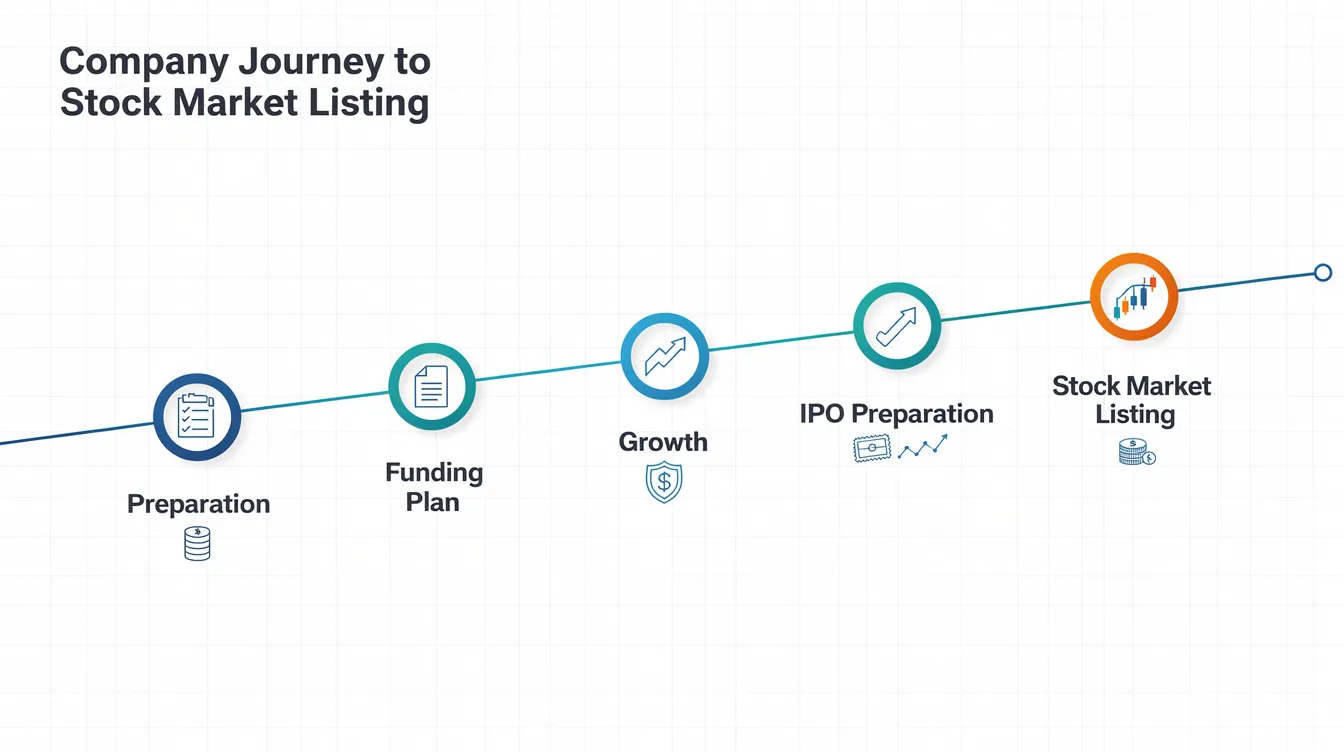
The sme ipo process typically takes 15 to 25 weeks from mandate to listing. But total time including preparation is longer. Realistic range: 9 to 15 months overall.
| Phase | Duration | Key Activities |
|---|---|---|
| Pre-Mandate Preparation | 0–6 months | Financial/tax/legal clean-up, governance upgrades, document collection |
| Mandate to DRHP Filing | 2–4 months | Due diligence, restated financials, DRHP drafting, board approvals |
| DRHP Review & Approval | 1–3 months | Exchange queries, clarifications, in principle approval |
| Issue & Listing | 1–2 months | Roadshows, public subscription (the IPO subscription period usually lasts 3 to 10 working days), allotment, demat credit, listing |
Use any waiting period during exchange review to refine internal MIS, train staff on regulatory compliance, and prepare for life as a publicly listed company. Post-issue compliance includes ongoing SEBI regulations – quarterly reporting, corporate governance disclosures, and continuous investor relations.
Estimated Cost of SME IPO in India (2026 View)
SME IPO cost depends on issue size, complexity, and choice of advisors. Here is an indicative breakdown:
| Cost Head | Approximate Range |
|---|---|
| Merchant banker fees (fixed + success-based) | ₹15 lakh – ₹3.6 crore (varies with issue size) |
| Legal and due diligence fees | ₹3 – ₹8 lakh |
| Auditors (restated financials) | ₹2 – ₹5 lakh |
| Registrar and transfer agent | ₹2 – ₹5 lakh |
| Stock exchange and SEBI fees | ₹0.25 – ₹2 lakh |
| Marketing expenses and roadshows | ₹2 – ₹8 lakh |
| Printing and advertising | ₹2 – ₹8 lakh |
| Market maker deposit (refundable) | ₹5 – ₹15 lakh |
For a ₹30–60 crore issue, total cost typically falls between ₹1.5 crore and ₹4.5 crore. For smaller issues (₹10–25 crore), total cost may range from ₹75 lakh to ₹1.5 crore.
Part of the merchant banker’s success fee is typically paid from IPO proceeds. Ensure clear engagement letters detailing fee structure to avoid disputes. The cheapest option is not always the best – strong advisors who help achieve better valuation through cleaner processes can more than justify their fees.
Benefits of Proper SME IPO Preparation for the Business
Even if a company eventually delays or cancels its IPO, the readiness work improves business quality permanently:
- Stronger financial discipline: Clean books and standardised accounting help you understand your own business better
- Better banking relationships: Banks and lenders trust companies with audited, transparent financials
- Higher enterprise value: Strategic investors, PE funds, and acquirers pay more for well-governed companies
- SME IPOs help companies lower their debt by raising funds through equity rather than expensive borrowing
- Listing enhances visibility and credibility for SMEs in the market – with customers, suppliers, and government agencies
- SME IPOs provide liquidity for promoters and early investors who have been locked in for years
- SME IPOs encourage better business practices through regulatory compliance and regular public reporting
Transparent systems also reduce dependence on any single individual and make succession planning easier in family businesses. Good preparation builds long-term investor relations, paving the way for follow-on offerings, preferential issues, or eventual migration to the mainboard.
Treat sme ipo preparation as an investment in organisational maturity, not just a regulatory requirement.
Practical Lessons from a Chartered Accountant Working with SMEs
Over 20 years of working with MSMEs, family businesses, and startups across manufacturing, trading, and services, I have gathered some hard-won lessons.
Case 1: A fabricated metals manufacturer had operated from land owned personally by the promoter for 15 years – no lease deed, no rent agreement. During IPO preparation, the exchange raised concerns about property title risk. We executed a proper lease, registered it, and disclosed it transparently. The result was improved investor confidence and a valuation multiple that was 15% higher than a comparable peer with similar title ambiguity.
Case 2: A wholesale trading company had significant cash transactions in its supply chain. During the tax health check, GST returns showed a ₹1.2 crore discrepancy with financial statements. Filing belated returns, reconciliation, and resolving notices took seven months. The IPO was postponed by almost a year.
Case 3: A services company had no MIS – the promoter tracked everything in his head and on spreadsheets. When the merchant banker asked for monthly segment-wise profitability for 36 months, it took the team three months just to reconstruct the data. The company had to postpone its IPO window by two quarters.
My principles for promoters:
- Whatever you are not ready to disclose in the DRHP, do not do in business.
- Separate personal finances from business finances completely – no exceptions.
- Involve your second line of management in IPO preparation. You cannot do this alone.
- Do not hide problems from your advisors. Every undisclosed issue will surface during due diligence – and it will be more expensive to fix then.
- The SME IPO is achievable for many Indian medium enterprises if they plan patiently and work systematically with experienced professionals.
SME IPO FAQs (Promoter-Focused)
These FAQs answer common practical questions that promoters and CFOs raise during early sme ipo discussions.
How early should a company start preparing for an SME IPO?
The ideal preparation window is 12 to 18 months before your planned listing date, especially if financials, tax records, or legal documents need clean-up. Companies with already strong compliance and governance can compress this to 6–9 months, but rushing increases the risk of surprises during due diligence.
Even if you are unsure about the exact IPO year, start with an IPO readiness review conducted by your CA or CS. This low-cost exercise identifies gaps early and gives you a realistic timeline.
Can a company with past losses still go for an SME IPO?
Exchanges require positive operating profit (EBIDTA) in at least 2 of the last 3 financial years. An occasional loss year may be acceptable if overall eligibility criteria are met.
The key is having a strong recent turnaround story. Investors want to understand why losses occurred, what changed, and whether profitability is sustainable. Discuss your specific numbers with a merchant banker early to assess feasibility before spending on full preparation.
Is bank loan restructuring or high leverage a problem for SME IPO?
A leverage ratio above 3:1 can create both eligibility and perception issues. If loans were recently restructured, exchanges and investors will scrutinise more carefully.
To improve your position: regularise banking relationships, avoid fresh defaults, and where possible, convert unsecured promoter loans into equity. Honest disclosure of past restructuring in the DRHP is mandatory, and strong recent financial performance can still attract growth opportunities from investors.
What is the minimum size of SME IPO that makes sense for a company?
There is no fixed minimum, but very small issues below ₹10 crore may not justify the fixed sme ipo cost. Marketing expenses, legal fees, and merchant banker costs remain substantial regardless of issue size.
The right approach is to prepare a 3–5 year business plan, compute the equity capital needed for growth, and then determine the issue size. Your CA and merchant banker can help model different scenarios of dilution and capital raise to find the right balance.
Can a company migrate from SME exchange to mainboard later?
Yes. Indian regulations allow migration from NSE Emerge or BSE SME to the mainboard once conditions are met – post-listing paid-up capital thresholds, sustained profitability, and a track record as a listed company.
Many promoters use the sme ipo as a first step, build credibility as a listed entity, and then migrate. To make this transition smoother, maintain governance and reporting quality at mainboard standards from day one.
SEO and Content Strategy for This Article
SEO Title, Meta Description, URL Slug, and Focus Keyword
- SEO Title: SME IPO Preparation Guide for Indian Promoters (2026)
- Meta Description: Step-by-step SME IPO preparation guide for Indian promoters covering eligibility, cost, checklist, timeline, and DRHP readiness. By CA Manish Gugliya.
- URL Slug: sme-ipo-preparation-india-guide
- Focus Keyword: SME IPO preparation
Secondary Keywords and Long-Tail Keyword Ideas
Secondary Keywords: SME IPO process India, SME IPO eligibility, SME IPO requirements, SME IPO cost, merchant banker role, draft red herring prospectus, SME exchange listing, SME IPO checklist, SME IPO valuation, SME IPO readiness
Long-Tail Keywords:
- How to prepare for SME IPO in India
- SME IPO preparation checklist for promoters
- SME IPO eligibility criteria for medium enterprises
- Minimum net tangible assets for SME IPO
- SME IPO vs mainboard IPO in India
- SME IPO cost breakdown 2026
- Steps to list company on NSE Emerge
- SME IPO timeline from preparation to listing
- Corporate governance requirements for SME IPO
- Documents required for SME IPO India
- How to choose merchant banker for SME IPO
- SME IPO DRHP preparation guide
- Tax compliance for SME IPO readiness
- Financial statement cleanup before IPO
- SME IPO valuation methods explained
- Legal due diligence checklist SME IPO
- Common mistakes in SME IPO preparation
- SME IPO cost for small companies
- How long does SME IPO process take
- Promoter eligibility for SME IPO India
Image ALT Text Suggestions
- SME IPO preparation roadmap diagram India
- Comparison of SME IPO and mainboard IPO requirements
- SME IPO eligibility criteria chart
- Merchant banker role in SME IPO process
- SME IPO timeline from preparation to listing
- SME IPO cost components breakdown
- SME IPO checklist for promoters
- SME IPO valuation and capital structure planning
- Corporate governance upgrade for SME IPO
- Tax compliance review before SME IPO
Suggested Schema Markup, Internal Links, and External References
Schema Markup: Use Article schema (JSON-LD) with properties: headline, author (CA Manish Gugliya), datePublished, dateModified, description, mainEntityOfPage, and publisher. Use FAQPage schema marking each FAQ question-answer pair as mainEntity with Question and Answer types.
Internal Linking Opportunities: Pages covering business valuation services, project finance advisory, tax compliance services, corporate governance consulting, and mainboard IPO comparison.
External Authoritative References:
- SEBI – ICDR Regulations and SME Guidelines
- NSE Emerge – Eligibility Criteria
- BSE SME Platform
- MCA – Companies Act Filings
- ICAI – Accounting and Auditing Standards
Social Media Description: Complete 2026 guide to SME IPO preparation for Indian promoters. Covers eligibility, cost, timeline, DRHP, governance, and 20+ common mistakes to avoid. By CA Manish Gugliya.
LinkedIn Excerpt: Planning an SME IPO? Start preparation 12–18 months before approaching a merchant banker. This comprehensive guide covers everything Indian promoters need – from eligibility criteria and financial cleanup to DRHP preparation, advisor selection, and realistic cost estimates. Based on 20+ years of hands-on CA experience with MSMEs across manufacturing, trading, and services. Read the full guide to understand exactly what it takes to go from a private company to a publicly listed entity on NSE Emerge or BSE SME.
Conclusion and Call to Action for Promoters
SME IPO preparation is a structured journey. Assess your business honestly. Clean your financials and taxes. Organise legal documents. Strengthen corporate governance. Then work with an experienced merchant banker to raise capital from the securities market.
The message is simple: start 12 to 18 months early. Treat IPO readiness as a long-term business improvement project, not a last-minute compliance exercise. Shortcuts that save time today will cost you valuation and reputation tomorrow.
If you are planning to list your company in the next 2–3 years, begin with a simple internal readiness review using this guide as your checklist. Discuss your specific situation with your Chartered Accountant or advisory firm. Even if the timing is not perfect today, the groundwork you lay now will make the actual sme ipo process dramatically smoother.
The future of SME IPOs in India is strong. The capital market is maturing, and there are genuine growth opportunities for disciplined medium enterprises to become respected, publicly listed companies. The economic growth story of India needs companies like yours – companies willing to be transparent, well-governed, and accountable to public shareholders.
The best time to start preparing was 18 months ago. The second best time is now.
About the Author: CA Manish Gugliya
CA Manish Gugliya is a Chartered Accountant with over 20 years of professional experience spanning SME advisory, business valuation, project finance, bank loan consulting, financial planning, taxation, audit, and business growth consulting. He has worked extensively with MSMEs, family-owned businesses, and startups across manufacturing, trading, and service sectors, helping them strengthen financial systems, improve regulatory compliance, and prepare for fundraising through debt and equity markets.
His hands-on expertise includes guiding companies through sme ipo preparation, coordinating with merchant bankers, lawyers, and regulators, and building internal systems that make businesses investor-ready. CA Manish Gugliya is known for translating complex financial and regulatory concepts into simple, actionable advice for promoters who may not have a formal finance background.
Whether you are exploring bank finance, private equity, or a listing on the capital market, CA Manish Gugliya is a trusted advisor for SMEs planning sustainable, long-term growth.
- मुद्रा लोन रिजेक्शन के कारण – बैंक किन वजहों से आवेदन अस्वीकार करते हैं? (Complete Guide)

- क्या नया बिजनेस होने की वजह से मुद्रा लोन रिजेक्ट हो सकता है?
- मुद्रा लोन रिजेक्शन में बैंक की इंटरव्यू और चर्चा कितनी महत्वपूर्ण होती है?
- बैंक आपके व्यवसाय की व्यवहार्यता (Business Viability) कैसे जांचता है? [CA की complete लोन गाइड]
- मुद्रा लोन रिजेक्ट होने में बैंक की Internal Credit Policy की क्या भूमिका है?
- क्या पहले किसी बैंक द्वारा रिजेक्ट किया गया मुद्रा लोन आवेदन नए आवेदन को प्रभावित करता है? (2026)
- मुद्रा लोन आवेदन रिजेक्ट होने से पहले बैंक किन बातों की अंतिम जांच करता है?
- मुद्रा लोन आवेदन की कौन-कौन सी गलतियाँ रिजेक्शन का कारण बनती हैं?
- अच्छा CIBIL Score होने पर भी मुद्रा लोन क्यों रिजेक्ट हो सकता है? (2026)
- मुद्रा लोन रिजेक्ट होने का असली कारण कैसे पता करें? पूरी गाइड (2026)
- Why One Large Customer Can Reduce Your Business Valuation (2026 Guide)

- How to Prepare Your Company for an SME IPO in India (2026): Practical Guide by a Chartered Accountant